
Loading available options...
Overview
- Duration:9 days 8 nights
- Travelers:1 - 20 guests
- Tour Type:Adventure & Trekking Tours, Package tour
- Language:English
Highlights
- Historic Fortresses: From the oldest (Simtokha) to the most beautiful (Punakha).
- Trans Bhutan Trail: 3 days of exclusive access to the newly restored royal path.
- Nunnery Visit: A rare look at the lives of Bhutan’s Buddhist nuns at Sangchhen Dorji.
- Cultural Immersion: Interact with monks at Nalanda and students at Zorig Chusum.
- Spiritual Icons: Includes the Big Three: Tiger's Nest, Kyichu Lhakhang, and the Giant Buddha.
Includes/Excludes
- Government-approved 3-4 star hotels or homestays with full board (B/L/D).
- All local taxes, monument entrance fees, and inland travel permits.
- Visa fees ($40) and the Sustainable Development Fee ($100/night).
- Licensed English-speaking guide and all private land transfers.
- Daily bottled water and a complimentary SIM card for couples.
- International flights (available upon request).
- Personal travel and medical coverage.
- Laundry, souvenirs, and additional data/phone usage.
- Optional tips for your guide and driver.
Itinerary
Expand allDay 1: Arrival & The Ancient Gateway (Paro to Thimphu)
The Experience: Land in Paro and drive to Thimphu. Stop at Simtokha Dzong, built in 1629—it is the first fortress of its kind in Bhutan and guards the gateway to the capital.
Highlight: An evening orientation walk through the Thimphu Craft Bazaar and a visit to the Tashichho Dzong to witness the ceremonial changing of the guard.
Overnight: Thimphu.
Day 2: The Giant Buddha & Living Heritage (Thimphu)
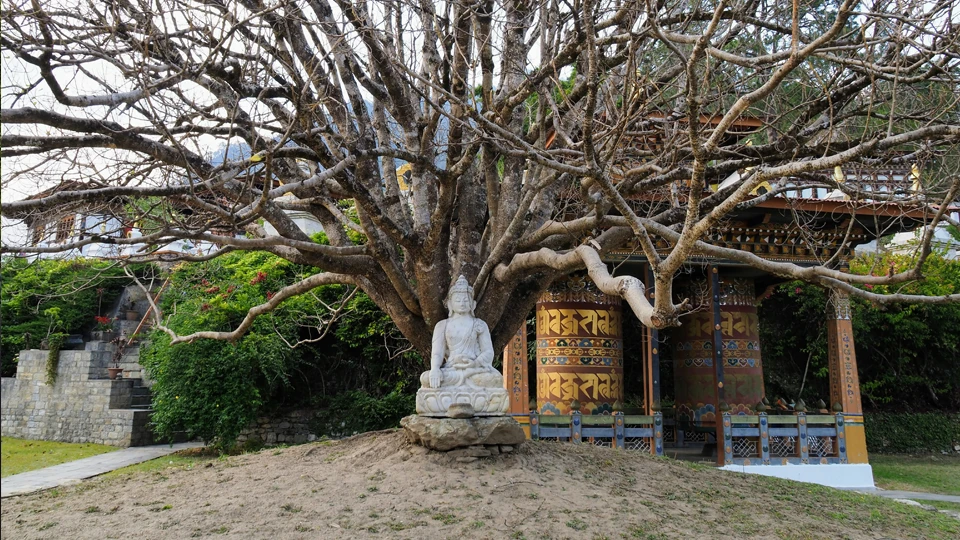
The Experience: Ascend to Buddha Dordenma, then visit the National Memorial Chorten, the spiritual heart of the city. Explore the National Library to see one of the world's largest books.
Hidden Gem: Visit the Motithang Takin Preserve to see Bhutan’s national animal, then watch students at the Zorig Chusum (School of 13 Arts) preserving ancient crafts.
Overnight: Thimphu.
Day 3: Crossing the Cloud Pass (Thimphu to Punakha)
The Experience: Stop at Dochula Pass (3,100m) to see the 108 Stupas. Visit the Druk Wangyal Lhakhang, a temple featuring unique 21st-century murals.
Highlight: Descend into the valley and hike to Chimi Lhakhang (Fertility Temple). Finish the day at Sangchhen Dorji Lhuendrup Nunnery, which offers the best sunset view over the Punakha and Wangdue valleys.
Overnight: Punakha.
Day 4: The Palace of Great Happiness & Nalanda (Punakha)
The Experience: Deep dive into Punakha Dzong. Afterward, visit the Nalanda Buddhist Institute, where you can interact with monks learning English and philosophy.
Adventure: Cross the Punakha Suspension Bridge and hike to Khamsum Yulley Namgyal Chorten, a temple built for world peace with stunning views of the Mo Chhu river.
Overnight: Punakha.
Day 5: Rejoining the Ancient Trail (Punakha to Tsalunang)
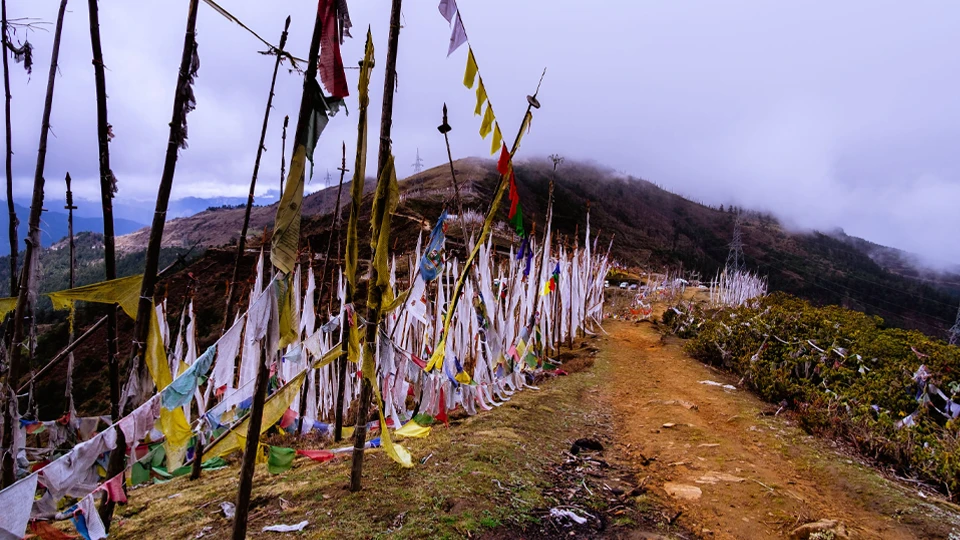
The Experience: Enter the Trans Bhutan Trail. This section takes you through the "Divine Madman’s" traditional route, passing through untouched villages like Thinleygang.
Highlight: Visit the Thinleygang Lhakhang, where the Central Monastic Body rests during their seasonal migration.
Overnight: Signature Campsite (Eco-Luxury Tents).
Day 6: Deep Woods & Birdwatcher’s Ridge (Tsalunang to Paro)
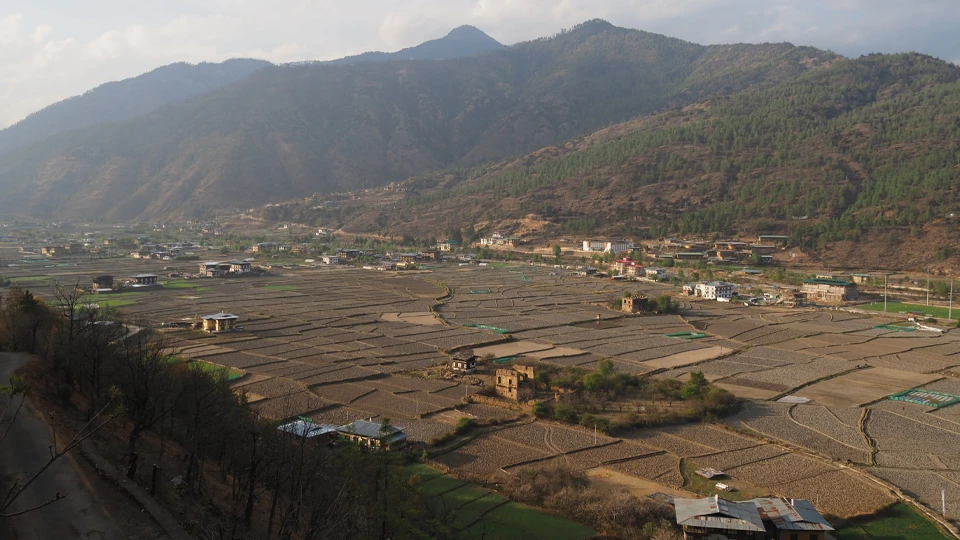
The Experience: A challenging but rewarding trek through primeval forests. Reach the Tsalu Ridge for a panoramic view of the Paro Valley and the distant Himalayan peaks.
Hidden Gem: Descend toward Paro and visit Dumtseg Lhakhang, a rare chorten-shaped temple known for its extraordinary three-story "Heaven, Earth, and Hell" murals.
Overnight: Paro.
Day 7: The Village of Dopshari (Trans Bhutan Trail)
The Experience: Walk the Lamgong to Dopshari section of the Trail. Explore the National Museum (Ta Dzong), housed in a 17th-century watchtower.
Highlight: A farmhouse lunch in Dopshari featuring a cooking demo and Archery. Visit Kyichu Lhakhang, one of the 108 temples built in the 7th century to pin down a giant demoness.
Overnight: Paro.
Day 8: The Grand Finale (Tiger’s Nest)
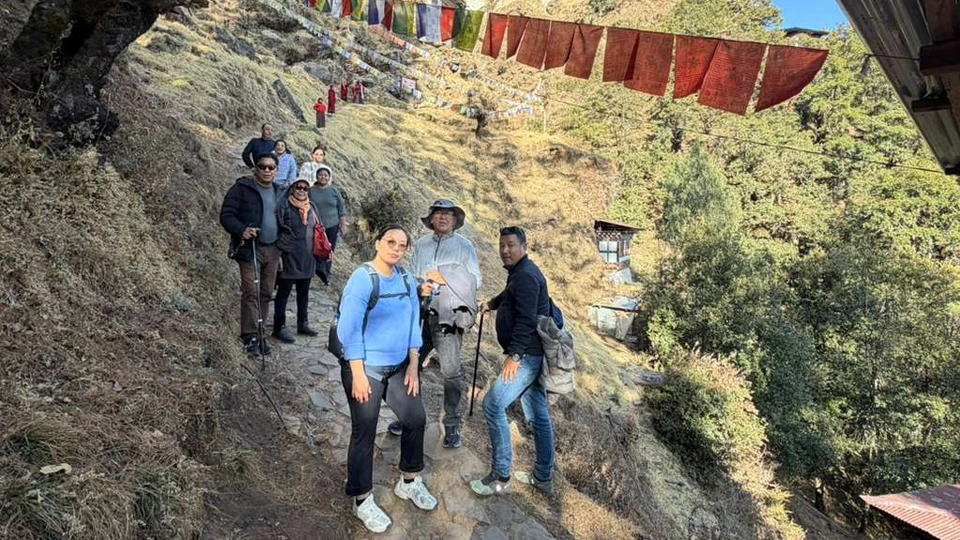
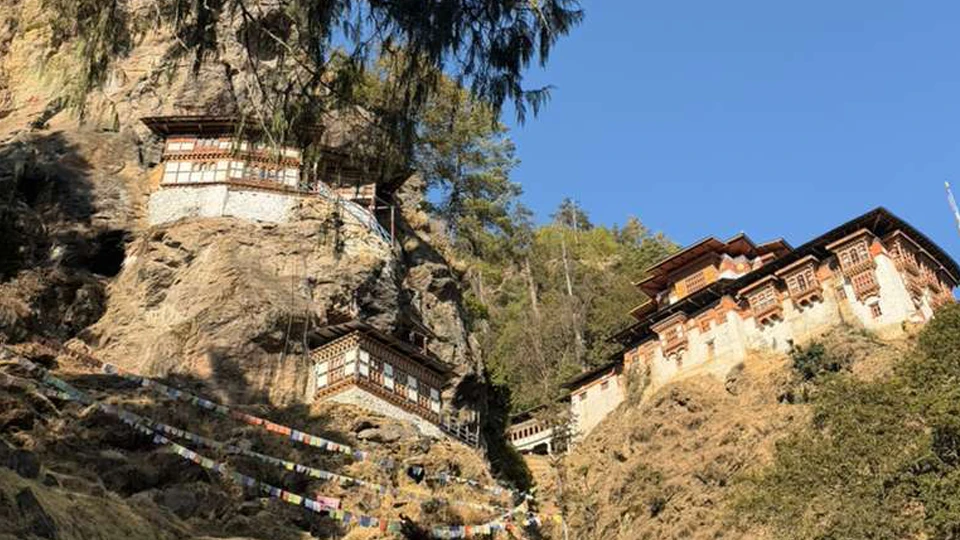
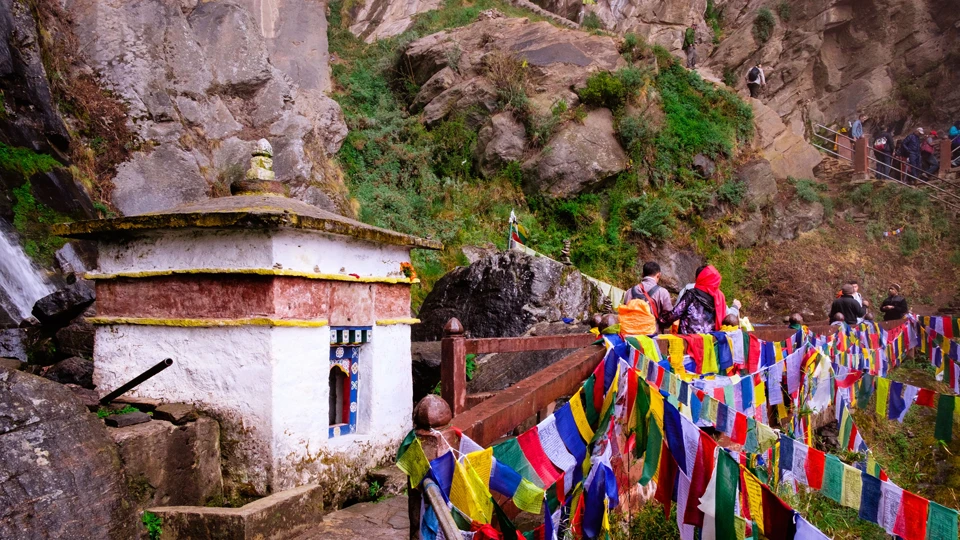
The Experience: The ultimate pilgrimage. Hike to Paro Taktsang (Tiger’s Nest). Explore the many altars of this cliff-side marvel.
Reward: Return for a Traditional Hot Stone Bath and a farewell dinner featuring Ara (local spirit) and Ema Datshi.
Overnight: Paro.
Day 9: Tashi Delek (Departure)
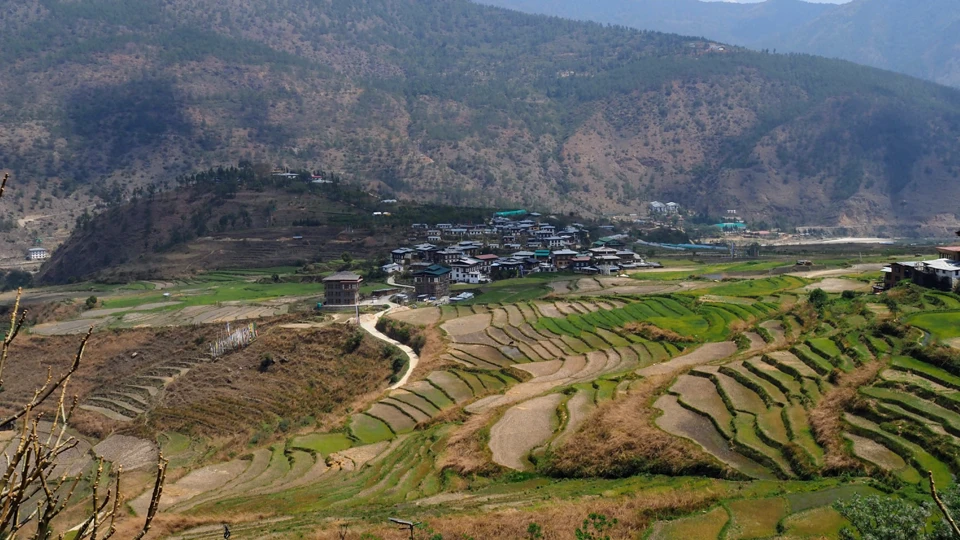
The Experience: One last look at the Paro valley before your transfer to the airport. You leave as a guest, but you return as a friend of the Kingdom.
Tour maps
Open in Google MapsFrequently asked questions
How difficult is the trekking on this 9-day itinerary?
Do I have to carry my own heavy luggage while trekking?
What is the accommodation like on the Trail?
- Luxury/Boutique Hotels: In Thimphu, Punakha, and Paro.
- Heritage Homestays: For an authentic cultural experience in Haa or Dopshari.
- Signature Campsites: High-quality, eco-luxury tents with comfortable bedding and hot meals prepared by our trekking chef.
What happens if I get too tired to continue walking?
Is there Wi-Fi or mobile signal on the trail?
What specific gear do I need for this trek?
Walking Poles: Highly recommended for the steep descents (especially on Day 2 and Day 8).
Hydration: A 2-liter reusable bladder or bottle (we provide filtered refills to minimize plastic waste).
Can I do this itinerary if I have a fear of heights?
Have a question before booking? Message us to learn more.